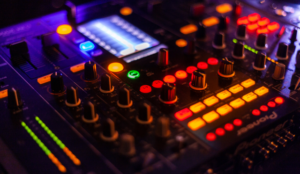
Understanding audience psychology at events means going beyond simple technical planning. Every sound, color, and projected image in a venue affects how people feel, react, and move. Audio, lighting, and video are never neutral elements: they speak directly to the perceptual system and become powerful tools for emotional communication.
In recent years, numerous studies—including those by the American Psychological Association—have shown that a well-calibrated sensory stimulus can increase attention, reduce stress, enhance focus, and make an event far more memorable. For this reason, audience psychology in events is not an abstract concept but a practical lever that event organizers must know how to use.
This article explores how audio, lighting, and video shape audience perceptions and how, when used thoughtfully, they can create engaging experiences.
The Power of Sound: The First Emotion Comes from Audio
Audio is the first element to reach the audience: it comes before lights, before images, and often even before verbal content. It is the ultimate emotional vector.
Introductory music, even soft, can immediately set the atmosphere. Conversely, poorly calibrated microphones can cause discomfort and compromise the audience’s emotional receptiveness. This is where audience psychology in events comes into play: sound does more than “fill” a space—it shapes it.
Music, for instance, is a powerful emotional trigger. It can make a formal moment more solemn, a personal speech more intimate, or a product launch more dynamic. Similarly, vocal timbre, bass levels, and speaker directionality influence the overall perception of the event.
Across different contexts—from corporate conventions to art installations—balanced audio maintains attention, reduces cognitive noise, and guides the audience toward the intended experience. It is an element of emotional direction.
Light as an Emotional and Perceptual Guide
Light has an immediate impact on how an environment is perceived. Warm colors can make people feel comfortable, cool colors convey formality, while intense lighting can energize the audience. Since it affects both behavior and emotion, lighting is crucial for event planning.
When considering audience psychology in events, lighting design plays a central role. Colors communicate quickly and often unconsciously. For example:
- Blue promotes focus and a sense of trust
- Red evokes energy, attention, and dynamism
- Green suggests calm and relaxation
- Purple inspires creativity and elegance
The intensity and direction of light can guide the audience’s gaze, highlight key moments, or create rhythm in the storytelling. An experienced light designer does more than illuminate: they craft an emotional scenography that interacts with sound and visual content.
The Power of Visuals: Why Video Captures More Than Any Other Language
We live in a visual world. Audiences are used to communicating through images and video, and in events, this language is crucial.
Well-crafted visual content does more than “decorate”—it supports the entire storytelling. Studies show that videos and images improve message retention and keep attention high even during long presentations. This is why video is a fundamental component of audience psychology.
High-resolution LED walls, architectural mapping, dynamic scenography, and immersive projections create depth in communication, allowing audiences to feel fully immersed.
The difference lies not only in equipment quality but also in visual coherence: rhythm, color palette, graphics, and narrative must integrate seamlessly with audio and lighting. When these three elements are synchronized, audiences experience a sense of harmony that amplifies emotional impact.
The Multisensory Experience: When the Senses Work Together
One key principle in audience psychology at events is that multisensory stimuli increase engagement and memory. An event is not perceived in “separate parts”—audio here, lighting there, video elsewhere—but as a unified whole.
The more senses you engage, the more emotionally present the audience will be. This is not about doing more but creating synergy. A sound can underscore a light change, a projection can anticipate a key moment, a color can accompany a guest’s entrance. Atmosphere is born from the fusion of these elements. That’s why concerts, contemporary art installations, and institutional ceremonies feel so intense: they speak to the mind on multiple levels simultaneously.
Sensory Coherence as the Key to Success
Even the most spectacular elements lose effectiveness if they are not coherent. Sensory coherence ensures an event communicates clearly and professionally. Colors, sounds, and images must tell the same story.
When coherence is lacking, audiences notice immediately: overly loud audio during a delicate moment, overly cold lighting during an emotional story, or a video with a graphic style that clashes with the scenography can break the balance.
This is why audience psychology in events must be considered from the planning stage. It’s not just about having high-quality equipment, but about knowing how to orchestrate it.
How Emergenze Sonore Applies Audience Psychology in Events
Emergenze Sonore always starts from a simple principle: every technical choice must create a precise emotion. Integrating audio, lighting, and video means applying audience psychology in practice, building a coherent atmosphere from start to finish.
Planning begins with analyzing the audience, the venue, and the objectives. From there, a direction is developed that harmonizes sounds, colors, and visual content so nothing appears random or out of place. When the three elements work together, the experience becomes more engaging and memorable.
For a deeper dive into technical aspects, you can also read our article on choosing the perfect equipment for any type of event.
And if you want to create an event that truly leaves a mark, rely on a team capable of transforming technology into emotion: Emergenze Sonore is here to guide you through every phase, from concept to realization.